
FAQ about the Flexshooter tripod head


FAQ about the Flexshooter tripod head
When you start looking into the Flexshooter tripod head, the question usually isn’t whether to get one, but rather the famous: Yes, but which one exactly?
In this FAQ about the Flexshooter tripod head we’ve collected the typical questions we get more frequently and give you clear, practical answers, so you don’t have to research forever and can simply get out and shoot.
Flexshooter with lever clamp or screw clamp?
First, the basics: on the Flexshooter sits a so‑called cross clamp. This means you can securely mount both your lens with a lens foot or Arca‑compatible plate and your camera with an Arca Style camera plate or L‑bracket.
The clamp grips from four sides at the same time, all four jaws move synchronously. This ensures very even, stable clamping, but it does have one small drawback: the adjustment travel is comparatively long.
With the version with screw clamp this specifically means that you open and close the clamp over a longer screw travel. It works reliably, but if we’re honest, in the long run it’s a bit leisurely. Especially when you’re outside in the cold, maybe wearing gloves, or when things have to go quickly, this long turning can eventually get on your nerves.
This is exactly why in most cases we recommend the Flexshooter with lever clamp. Here you don’t have to keep screwing: you simply flip the lever open, insert your camera‑lens combination and close the lever again. Done. This is not only significantly faster, but in everyday use it also just feels safer, because you immediately notice whether everything has properly locked into place.
Another plus of the lever clamp: it is a bit more tolerant. You can finely readjust the clamping width so that your camera or lens sits really snug and play‑free on the Flexshooter, even if you use different Arca Style plates.
Anyone using multiple systems or plates from different manufacturers in particular benefits from this small but crucial flexibility.
Black Edition or Silver Edition – what’s the difference?
The technical design is identical for both versions, the function is the same, the load capacity is the same, and so is the mechanics. The difference lies in the anodizing of the outer ball.
On the Black Edition the outer ball is black anodized. The Silver Edition has a silver‑colored anodizing.
Between the two anodizings themselves there is no difference in terms of stability or durability; the surfaces are comparably robust in use.
In practice, however, we observe a clear trend: nature photographers, wildlife photographers and everyone who works a lot in the forest, in reed beds or generally in more inconspicuous environments tend to choose the Black Edition significantly more often. The black ball reflects less and is hardly noticeable in nature, which can definitely be an argument for skittish animals or discreet working methods.
Those who work more in the studio, in architecture or in urban environments sometimes deliberately choose the Silver Edition, simply because it stands out visually and pairs well with other silver or metallic components.
Functionally, there is no difference. Both versions perform the same; in the end the decision is a matter of taste and intended use.
Flexshooter Mini or Flexshooter Pro – which size is right?
The choice between Flexshooter Mini and Flexshooter Pro depends on your gear. Both heads are powerful, but they are optimized for different priorities.
The Flexshooter Mini is excellently suited for telezoom lenses. It carries typical telezooms without complaint, but also handles large glass. Examples are 600 mm f/4 or 400 mm f/2.8 lenses, which the Mini can definitely support.
The special feature lies in the spring compensation, which on the Mini is tuned more towards compact camera‑lens combinations. This means that these setups balance very harmoniously and are pleasant to handle.
However, if you are working with really large, heavy prime telephoto lenses and your gear overall falls more into the “massive” category, then the Flexshooter Pro is the better choice. For larger setups with long primes, the Pro’s spring compensation works optimally. Your gear can be panned and tilted in a very controlled way without you constantly having to fight against the weight.
Of course, you can also use the Pro with lighter combinations. That is no technical problem. In practice, however, it often feels a bit less harmonious, because the Pro’s spring compensation is designed for higher loads and simply feels too strong with very light setups. You could say it works, but it’s not really enjoyable, because the fine, smooth handling you expect from a perfectly matched head is somewhat lost.
So if you mainly work with telezooms and moderate telephoto primes, the Flexshooter Mini is usually the coherent, pleasantly lightweight solution. If, on the other hand, you regularly work with large, heavy super‑telephoto lenses, there is hardly a sensible way around the Flexshooter Pro.
What actually fits on the Flexshooter tripod head?
You can find a detailed blog article about this.
The short answer: everything that is Arca Style compatible usually feels right at home on the Flexshooter. The cross clamp accepts both lenses with a matching lens foot and cameras with an Arca Style camera plate or L‑bracket. So if you already use an Arca system, you’re ready to go immediately. Specifically, this means: telezooms, long primes, classic standard zooms, mirrorless cameras, DSLR bodies with L‑bracket, more compact setups with smaller plates – all of this can be securely fixed. The only important thing is that the plates are precisely made and truly Arca Style compatible. Then your gear sits stably on the head, without wobble or slipping. Anyone using several lenses with different feet or plates can easily use the Flexshooter as a central base. You simply change the combination without having to fiddle around for ages each time. Especially in wildlife or sports, when things have to move quickly, this pays off. And if you’re wondering whether your particular setup is too exotic: in practice we find that the vast majority of common combinations fit excellently as long as they stay within the Arca system.
Why should I choose the Flexshooter tripod head?
The Flexshooter is the proverbial jack‑of‑all‑trades. It combines several functions in one compact system and thus saves you not only weight, but also the constant switching between different heads.
For one thing, the Flexshooter has a very low build height, which in practice means that your center of gravity is closer to the tripod. This increases stability, especially with long focal lengths or in windy conditions. At the same time, leveling is already integrated. So you don’t need to mount an additional leveling head or other intermediate solutions to get your horizon straight.
On top of that comes the multifunctionality. The Flexshooter can be used as a tilt head, as a gimbal and as a ball head. In use, this means that with a single head you can shoot both classic landscapes and dynamic wildlife or telephoto shots without constantly changing systems. For wildlife, telephoto and landscape, the Flexshooter is therefore particularly well suited.
Anyone who travels a lot or frequently switches between different subjects and situations benefits from this versatility. Instead of carrying three different heads, you take the Flexshooter and cover most of the scenarios that arise in nature and telephoto photography. This saves space in your backpack and reduces the number of parts that can get lost or damaged on the road. All in all, the Flexshooter tripod head offers you a combination of low build height, integrated leveling and true multifunctionality as a tilt head, gimbal and ball head. For anyone who works seriously with telephoto lenses, wildlife subjects and landscapes and doesn’t want to mess around with wobbly compromise solutions, this is a very well‑thought‑out, thoroughly proven solution.
How does the locking mechanism of the outer ball work?
The outer ball has a locking lever.
On the Flexshooter, this special lever – often called an adjustable clamping lever or indexing lever – serves an important ergonomic function, as it allows the ball to be locked in a very confined space:
Engaged (normal state):
The lever is firmly connected to the thread via internal gearing.
Clockwise rotation: The ball is locked (clamped) so that the camera sits securely.
Counterclockwise rotation: The clamp is released to realign the camera.
Pulled out (idle mode):
When the lever is pulled outward against spring pressure, the internal gearing is disengaged. The handle can now be freely rotated without the thread turning with it.
Use: This is particularly useful when, while tightening, the lever hits the ball head housing or the camera. You pull it out, move it to a free position, let it engage again, and can then continue turning to apply the necessary force to secure the ball.
In short: It is a “ratcheting function” that prevents the lever from getting in the way or bumping into something and allows you to individually set the lever position for the fully locked state of the ball.


weitere BLOG-Beiträge
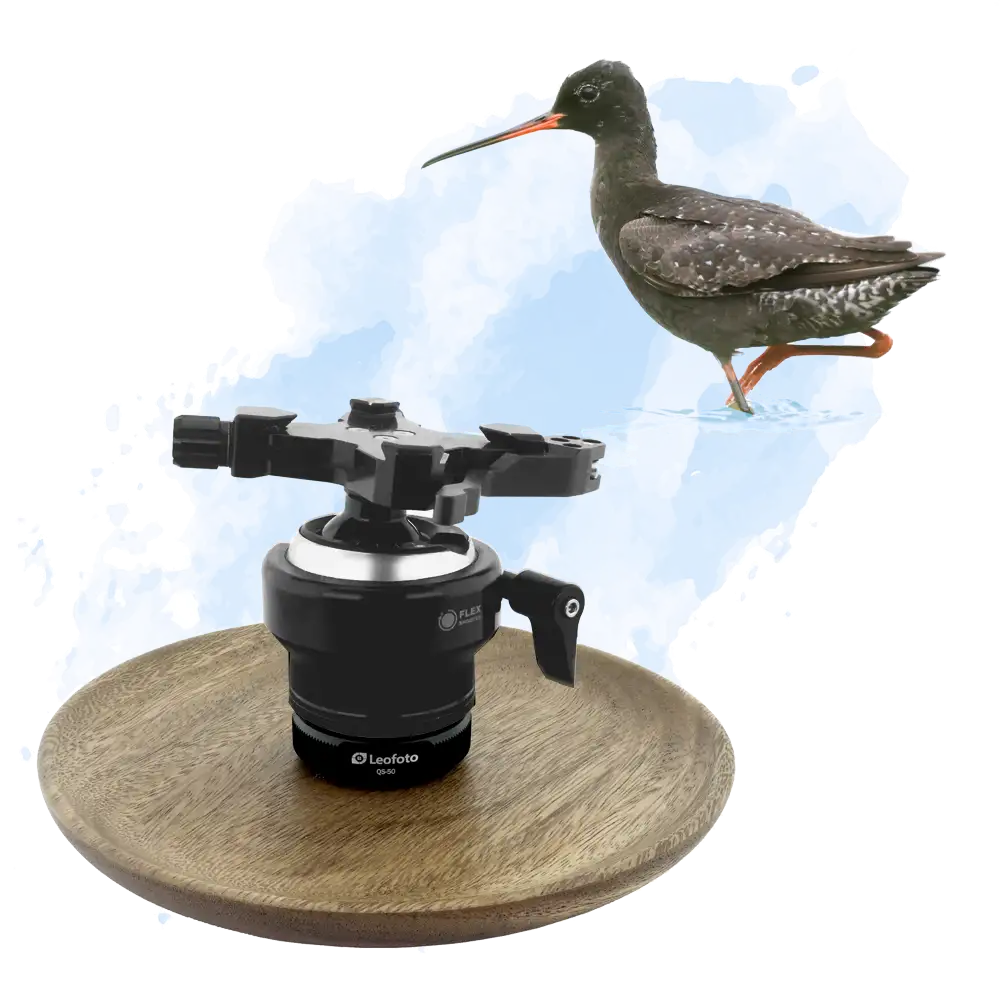
The bird migration has begun...
At the Baltic Sea, I have the opportunity to photograph waders both on the beach and at waters with shallow shorelines or flooded meadows.
On the beach, it is often enough to lie on your stomach and wait for the animals to come within photo distance.
It's quite differen...
not in stock, the item will be ordered for you
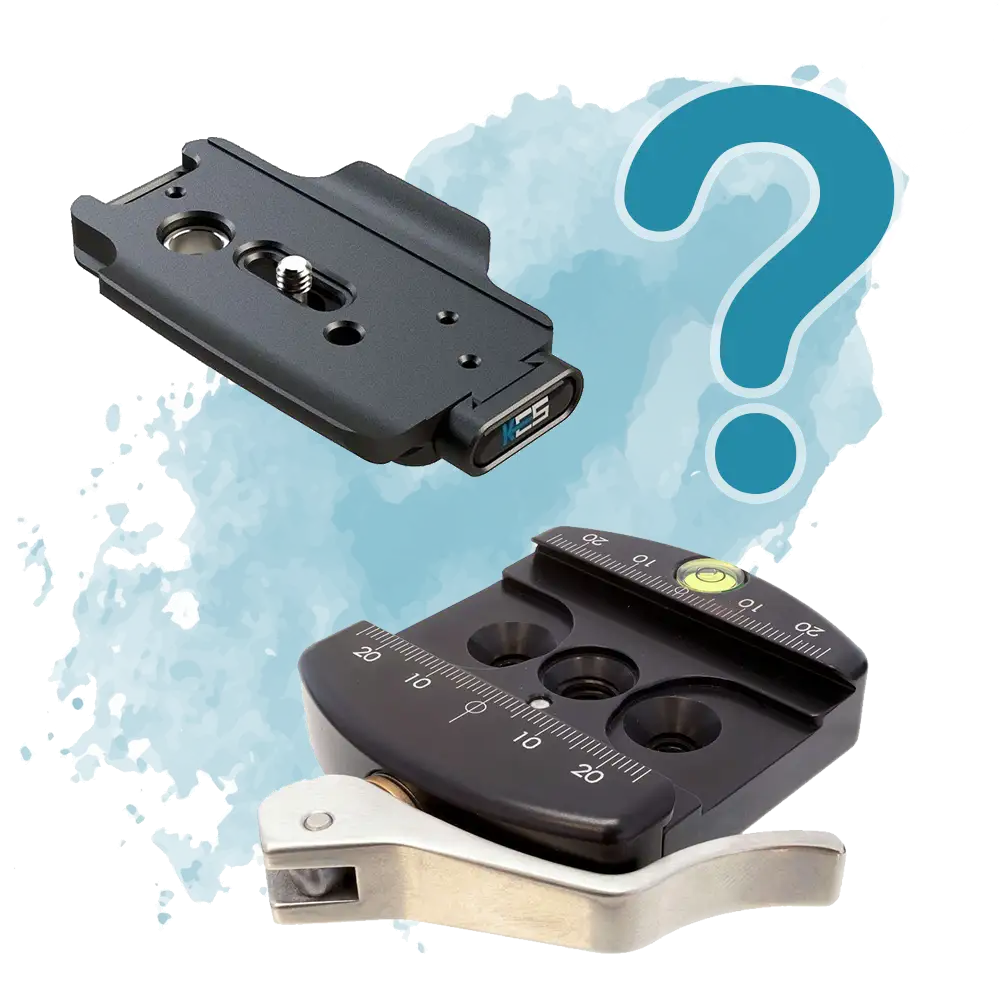
…unfortunately not very much.
In this post, we will gradually test and publish the compatibility of quick release components from various manufacturers.
Listed below, you will find which 38 mm dovetail systems are compatible with each other and which do not fit together.
For this, one must look f...
not in stock, the item will be ordered for you
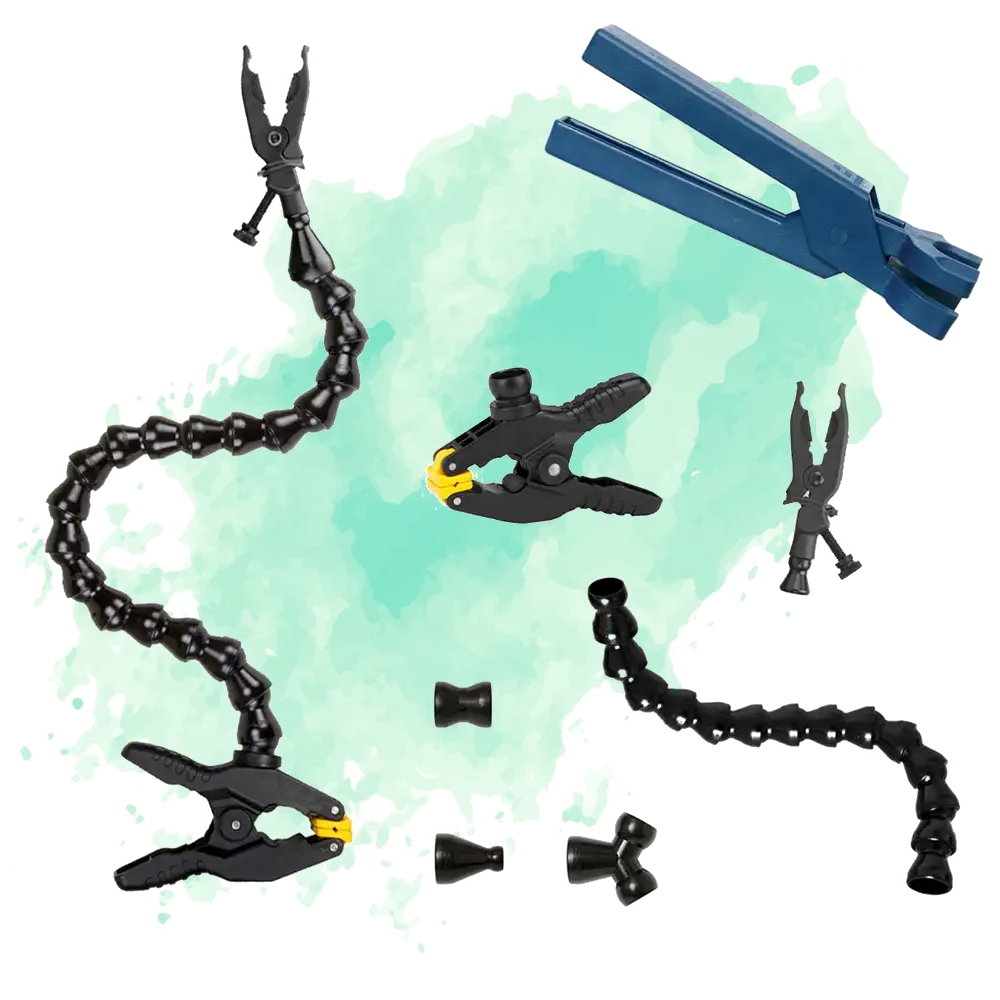
Macro accessories from Wimberley, the Plamp Family for precise macro photography Anyone who seriously engages in macro photography sooner or later stumbles over the same situation: the subject is beautiful, but the light isn’t right, a light breeze tugs at the blossom, and the diffuser is lying some...
not in stock, the item will be ordered for you
The Flexshooter tripod headsaccept almost all camera plates and L-brackets, lens plates and replacement feet with Arca-compatible profile with a width of 38 mm.
Flexshooters with lever clamp are a bit more tolerant; here you can readjust the clamp width so that your camera or lens sits really firmly ...
not in stock, the item will be ordered for you

Somehow the camera gear has to be carried.
But how do you attach the camera strap to your camera or your lens?
Traditionally, a carrying strap is attached to two lugs on the camera; with heavy lenses, a carrying strap is attached via lugs on the tripod collar.
This is often annoying,...
not in stock, the item will be ordered for you

Modular mounting system for camera backpacks
The MOLLE system on camera backpacks – modularity for photographers
The MOLLE system (Modular Lightweight Load-carrying Equipment) has also become established in the field of
photography in recent years.
Originally developed for the military, this modu...
not in stock, the item will be ordered for you

FAQ about the Flexshooter tripod head
When you start looking into the Flexshooter tripod head, the question usually isn’t whether to get one, but rather the famous: Yes, but which one exactly?
In this FAQ about the Flexshooter tripod head we’ve collected the typical questions we get more frequently...
not in stock, the item will be ordered for you
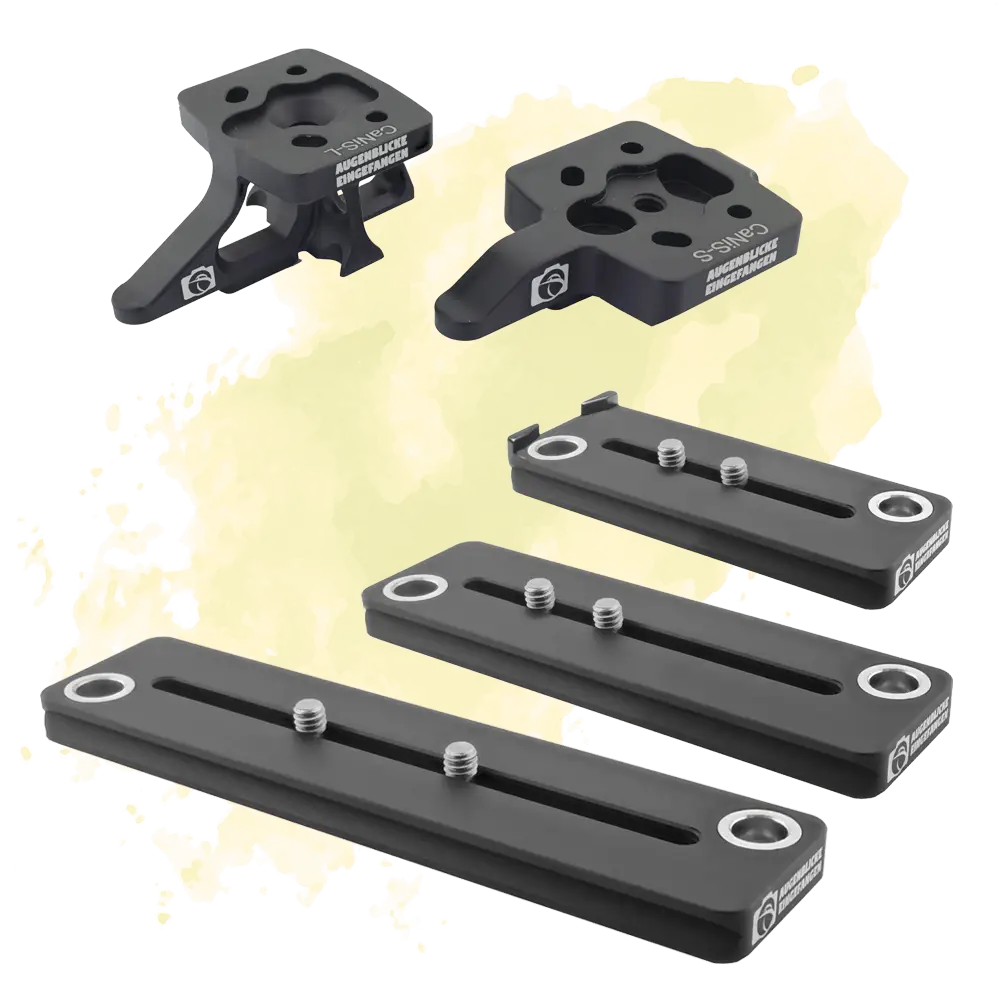
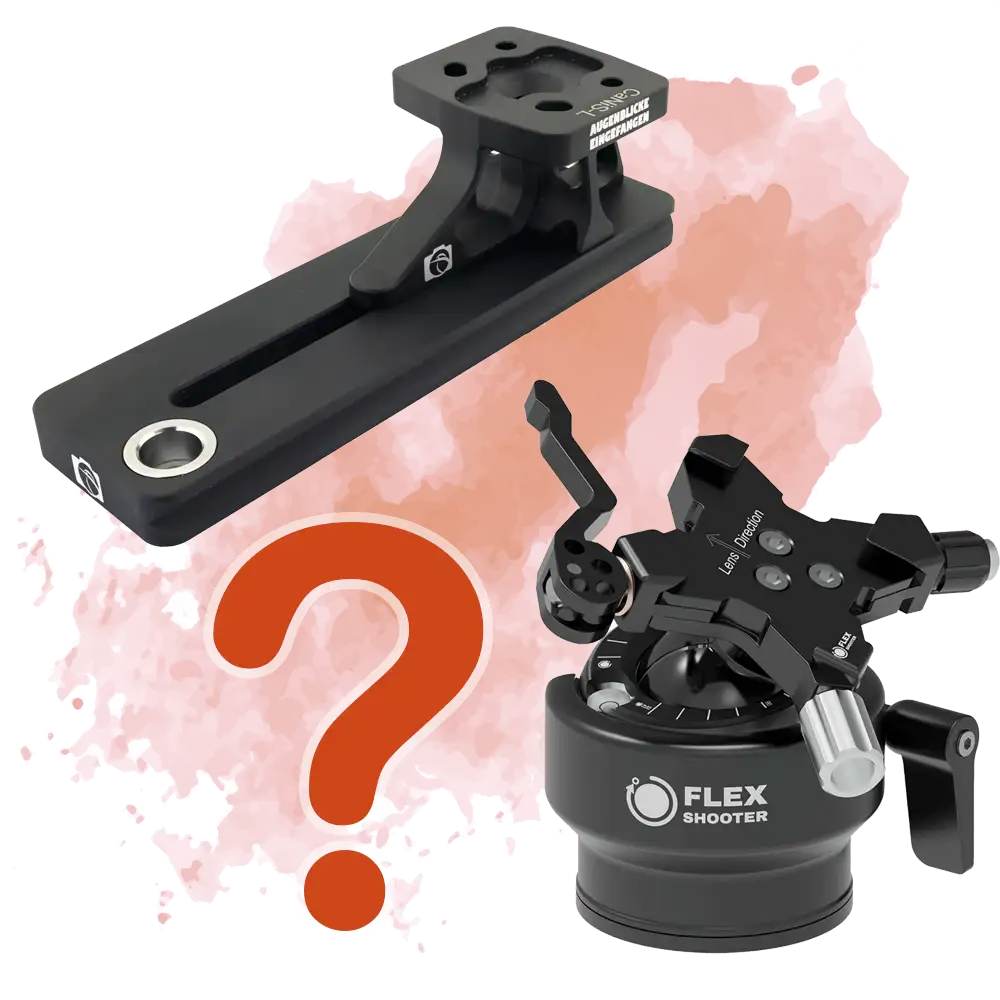
Discover the innovationModular replacement feet for telephoto lenses from Augenblicke-eingefangen
For ambitious photographers who are always looking for the perfect balance between stability and flexibility, the modular replacement feet from Augenblicke-eingefangen offer a modern solution.
These in...
not in stock, the item will be ordered for you
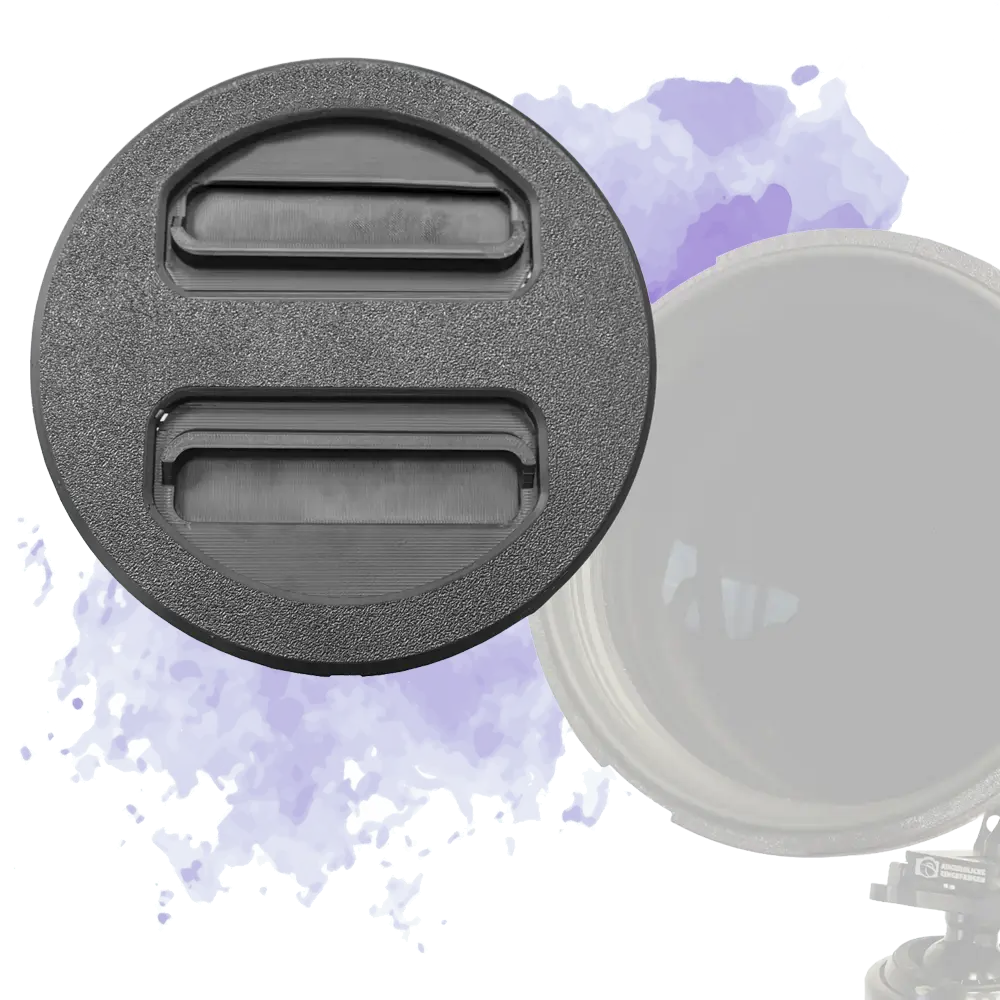
Snap-on lens caps for large telephoto lenses: BigLensCaps as a precisely fitting front element protection Anyone who photographs with large telephoto lenses, for example in wildlife, sports or nature photography, knows the problem: The front element of a super-telephoto lens is large, delicate an...
not in stock, the item will be ordered for you

Weatherproof protection for camera and lens, suitable solutions for outdoor and wildlife photography
Anyone who regularly shoots outdoors knows: the weather rarely sticks to your plans.
Especially in
wildlife, nature and sports photography, many of the most exciting images are created in rain, f...
not in stock, the item will be ordered for you