
FAQ sur la rotule de trépied Flexshooter


FAQ sur la rotule Flexshooter
Lorsque vous commencez à vous intéresser à la rotule Flexshooter, la question n’est généralement pas de savoir s’il faut en acheter une, mais plutôt la fameuse : Oui, mais laquelle exactement ?
Dans cette FAQ sur la rotule Flexshooter, nous avons rassemblé les questions typiques que l’on nous pose le plus souvent et nous vous donnons des réponses claires et pratiques, afin que vous n’ayez pas à faire des recherches sans fin et que vous puissiez simplement sortir photographier.
Flexshooter avec serrage à levier ou à vis ?
Commençons par les bases : sur la Flexshooter se trouve ce que l’on appelle une pince croisée. Cela signifie que vous pouvez fixer en toute sécurité à la fois votre objectif avec un pied d’objectif ou une plaque compatible Arca et votre boîtier avec une plaque boîtier de type Arca ou un L‑bracket.
La pince serre simultanément par quatre côtés, les quatre mâchoires se déplacent de manière synchrone. Cela garantit un serrage très uniforme et stable, mais présente un petit inconvénient : la course de réglage est relativement longue.
Avec la version avec serrage à vis, cela signifie concrètement que vous ouvrez et fermez la pince sur une longue course de vis. Cela fonctionne de manière fiable, mais pour être honnête, à la longue c’est un peu lent. Surtout lorsque vous êtes dehors dans le froid, éventuellement avec des gants, ou lorsque tout doit aller vite, ces nombreux tours peuvent finir par vous agacer.
C’est précisément pour cette raison que, dans la plupart des cas, nous recommandons la Flexshooter avec serrage à levier. Ici, vous n’avez plus à visser sans cesse : vous ouvrez simplement le levier, vous insérez votre combinaison boîtier‑objectif et vous refermez le levier. Terminé. Ce n’est pas seulement nettement plus rapide, mais à l’usage cela donne aussi un sentiment de sécurité, car vous remarquez immédiatement si tout s’est correctement enclenché.
Un autre avantage du serrage à levier : il est un peu plus tolérant. Vous pouvez régler très finement la largeur de serrage afin que votre boîtier ou votre objectif soit vraiment bien calé, sans jeu, sur la Flexshooter, même si vous utilisez différentes plaques de type Arca.
Ceux qui utilisent plusieurs systèmes ou des plaques de différents fabricants profitent particulièrement de cette petite mais cruciale flexibilité.
Black Edition ou Silver Edition – quelle est la différence ?
La conception technique est identique pour les deux versions, la fonction est la même, la capacité de charge est la même, tout comme la mécanique. La différence réside dans l’anodisation de la boule extérieure.
Sur la Black Edition, la boule extérieure est anodisée en noir. La Silver Edition possède une anodisation de couleur argentée.
Entre les deux types d’anodisation, il n’y a aucune différence en termes de stabilité ou de durabilité ; les surfaces sont comparables en robustesse à l’usage.
Dans la pratique, nous observons toutefois une tendance nette : les photographes de nature, les photographes animaliers et tous ceux qui travaillent beaucoup en forêt, dans les roselières ou de manière générale dans des environnements discrets choisissent nettement plus souvent la Black Edition. La boule noire reflète moins et est à peine visible dans la nature, ce qui peut clairement être un argument pour les animaux farouches ou des méthodes de travail discrètes.
Ceux qui travaillent davantage en studio, en architecture ou en milieu urbain optent parfois délibérément pour la Silver Edition, simplement parce qu’elle se démarque visuellement et s’accorde bien avec d’autres composants argentés ou métalliques.
Sur le plan fonctionnel, il n’y a aucune différence. Les deux versions offrent les mêmes performances ; au final, la décision est une question de goût et d’usage prévu.
Flexshooter Mini ou Flexshooter Pro – quelle taille choisir ?
Le choix entre la Flexshooter Mini et la Flexshooter Pro dépend de votre matériel. Les deux têtes sont puissantes, mais elles sont optimisées pour des priorités différentes.
La Flexshooter Mini convient parfaitement aux zooms téléobjectifs. Elle supporte sans difficulté les télézooms classiques, mais gère aussi les grandes optiques. Des exemples sont les objectifs 600 mm f/4 ou 400 mm f/2,8, que la Mini peut tout à fait porter.
La particularité réside dans la compensation par ressort, qui, sur la Mini, est davantage réglée pour des combinaisons boîtier‑objectif compactes. Cela signifie que ces configurations s’équilibrent de manière très harmonieuse et sont agréables à manipuler.
Cependant, si vous travaillez avec de très grands et lourds téléobjectifs à focale fixe et que votre matériel se situe globalement plutôt dans la catégorie « massif », alors la Flexshooter Pro est le meilleur choix. Pour les configurations plus importantes avec de longues focales fixes, la compensation par ressort de la Pro fonctionne de manière optimale. Votre matériel peut être panoramiqué et basculé de façon très contrôlée sans que vous ayez à lutter en permanence contre le poids.
Bien sûr, vous pouvez aussi utiliser la Pro avec des combinaisons plus légères. Ce n’est pas un problème technique. En pratique, toutefois, cela semble souvent un peu moins harmonieux, car la compensation par ressort de la Pro est conçue pour des charges plus élevées et paraît simplement trop forte avec des configurations très légères. On peut dire que cela fonctionne, mais ce n’est pas vraiment agréable, car la manipulation fine et fluide que l’on attend d’une tête parfaitement adaptée se perd quelque peu.
Donc, si vous travaillez principalement avec des télézooms et des téléobjectifs à focale fixe modérée, la Flexshooter Mini est généralement la solution cohérente et agréablement légère. En revanche, si vous travaillez régulièrement avec de grands et lourds super‑téléobjectifs, il n’y a pratiquement pas d’alternative sensée à la Flexshooter Pro.
Que peut‑on monter sur la rotule Flexshooter ?
Vous trouverez un article de blog détaillé à ce sujet.
La réponse courte : tout ce qui est compatible de type Arca se sent généralement parfaitement à sa place sur la Flexshooter. La pince croisée accepte aussi bien les objectifs avec un pied adapté que les boîtiers avec une plaque boîtier de type Arca ou un L‑bracket. Donc, si vous utilisez déjà un système Arca, vous êtes immédiatement opérationnel. Concrètement, cela signifie : télézooms, longues focales fixes, zooms standard classiques, appareils hybrides, boîtiers reflex avec L‑bracket, configurations plus compactes avec de petites plaques – tout cela peut être fixé en toute sécurité. La seule chose importante est que les plaques soient usinées avec précision et réellement compatibles de type Arca. Dans ce cas, votre matériel repose de manière stable sur la tête, sans jeu ni glissement. Ceux qui utilisent plusieurs objectifs avec des pieds ou des plaques différents peuvent facilement utiliser la Flexshooter comme base centrale. Vous changez simplement de combinaison sans devoir bricoler longuement à chaque fois. Surtout en photo animalière ou sportive, lorsque tout doit aller vite, cela fait la différence. Et si vous vous demandez si votre configuration particulière est trop exotique : dans la pratique, nous constatons que la grande majorité des combinaisons courantes s’adaptent parfaitement tant qu’elles restent dans le système Arca.
Pourquoi devrais‑je choisir la rotule Flexshooter ?
La Flexshooter est le véritable couteau suisse. Elle combine plusieurs fonctions dans un système compact et vous fait ainsi gagner non seulement du poids, mais vous évite aussi de changer constamment de tête.
D’une part, la Flexshooter a une hauteur de construction très faible, ce qui signifie en pratique que votre centre de gravité est plus proche du trépied. Cela augmente la stabilité, en particulier avec de longues focales ou par vent fort. En même temps, la mise à niveau est déjà intégrée. Vous n’avez donc pas besoin de monter une tête de mise à niveau supplémentaire ou d’autres solutions intermédiaires pour obtenir un horizon droit.
À cela s’ajoute la multifonctionnalité. La Flexshooter peut être utilisée comme tête pendulaire (tilt head), comme gimbal et comme rotule ball. À l’usage, cela signifie qu’avec une seule tête, vous pouvez photographier aussi bien des paysages classiques que des scènes animalières ou des prises de vue télé dynamiques, sans changer sans cesse de système. Pour la photo animalière, la télé et le paysage, la Flexshooter est donc particulièrement bien adaptée.
Ceux qui voyagent beaucoup ou passent fréquemment d’un sujet ou d’une situation à l’autre profitent de cette polyvalence. Au lieu de transporter trois têtes différentes, vous prenez la Flexshooter et couvrez la plupart des scénarios qui se présentent en photo de nature et de téléobjectif. Cela économise de la place dans votre sac à dos et réduit le nombre de pièces susceptibles de se perdre ou de s’endommager en route. Dans l’ensemble, la rotule Flexshooter vous offre une combinaison de faible hauteur de construction, de mise à niveau intégrée et de véritable multifonctionnalité en tant que tête pendulaire, gimbal et rotule ball. Pour tous ceux qui travaillent sérieusement avec des téléobjectifs, des sujets animaliers et des paysages et qui ne veulent pas s’encombrer de solutions bancales de compromis, c’est une solution très bien pensée et largement éprouvée.
Comment fonctionne le mécanisme de blocage de la boule extérieure ?
La boule extérieure possède un levier de blocage.
Sur la Flexshooter, ce levier spécial – souvent appelé levier de serrage réglable ou levier indexable – remplit une fonction ergonomique importante, car il permet de bloquer la boule dans un espace très restreint :
Enclenché (état normal) :
Le levier est fermement relié au filetage par un engrenage interne.
Rotation dans le sens horaire : la boule est bloquée (serrée) de sorte que l’appareil photo soit bien sécurisé.
Rotation dans le sens antihoraire : la pince est desserrée pour réaligner l’appareil photo.
Tiré (mode libre) :
Lorsque le levier est tiré vers l’extérieur contre la pression du ressort, l’engrenage interne est désengagé. La poignée peut alors être tournée librement sans que le filetage ne tourne avec elle.
Utilisation : cela est particulièrement utile lorsque, lors du serrage, le levier vient buter contre le corps de la rotule ou contre l’appareil photo. Vous le tirez, vous le placez dans une position libre, vous le laissez se réenclencher, puis vous pouvez continuer à tourner pour appliquer la force nécessaire afin de sécuriser la boule.
En résumé : il s’agit d’une « fonction à cliquet » qui empêche le levier de gêner ou de heurter quelque chose et vous permet de définir individuellement la position du levier pour l’état de blocage complet de la boule.


weitere BLOG-Beiträge
La migration des oiseaux a commencé...
Sur la mer Baltique, j'ai la possibilité de photographier des limicoles à la fois sur la plage, ainsi qu'aux abords de plans d'eau avec des zones riveraines peu profondes ou des prairies inondées.
Sur la plage, il suffit souvent de s'allonger sur le ventre et d'a...
pas en stock, l'article sera commandé pour vous
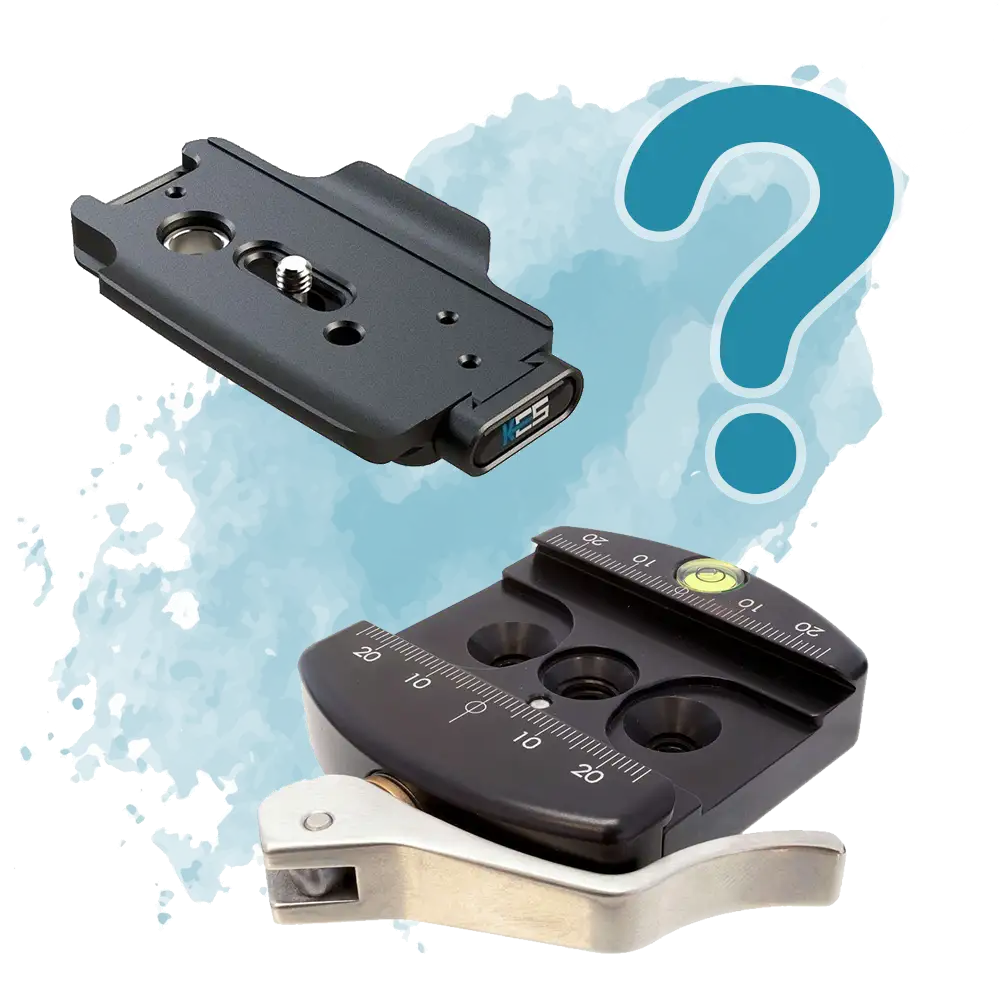
…malheureusement pas beaucoup.
Dans cet article, nous testerons et publierons progressivement la compatibilité des composants à changement rapide de différents fabricants.
Ci-dessous, tu trouveras une liste des systèmes à queue d'aronde de 38 mm qui sont compatibles entre eux et ceux qui ne le sont ...
pas en stock, l'article sera commandé pour vous
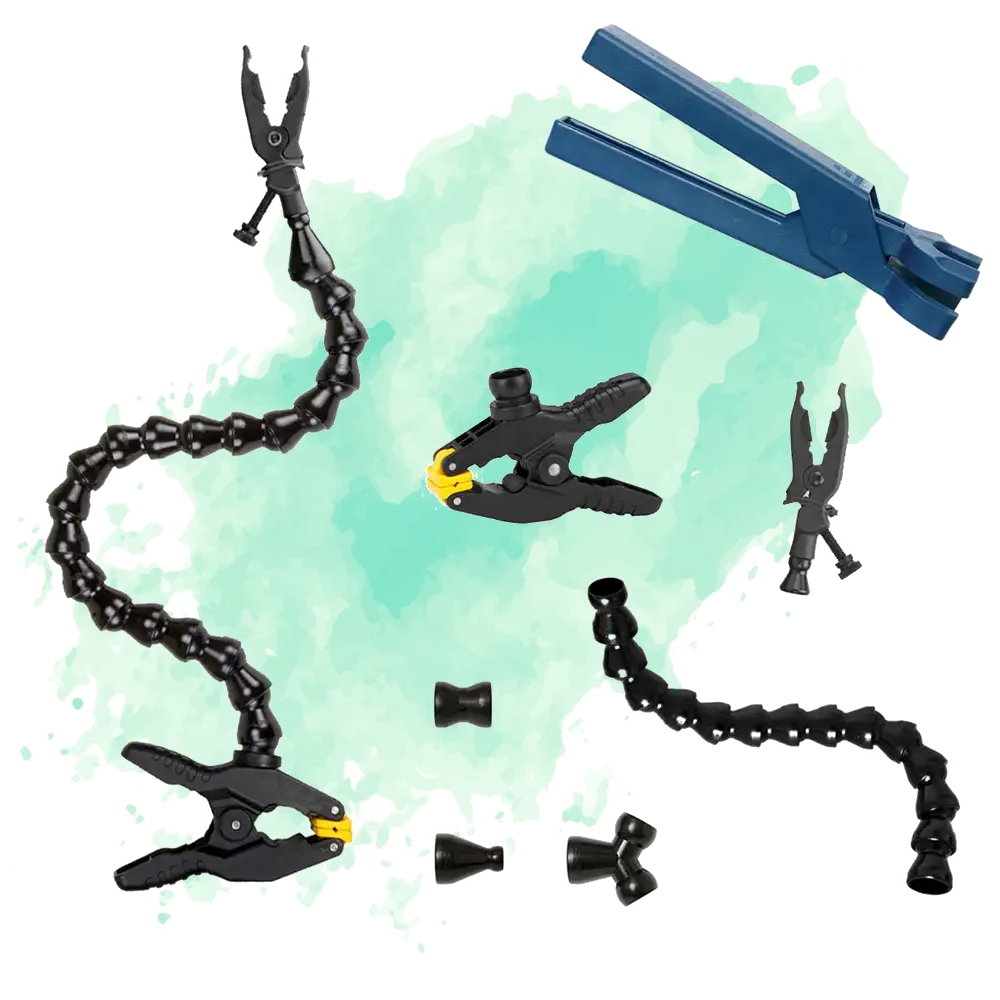
Accessoires macro de Wimberley, la Plamp-Family pour une macrophotographie précise Quiconque se consacre sérieusement à la macrophotographie se heurte tôt ou tard toujours à la même situation : le sujet est magnifique, mais la lumière ne convient pas, une légère brise fait bouger la fleur et le diff...
pas en stock, l'article sera commandé pour vous
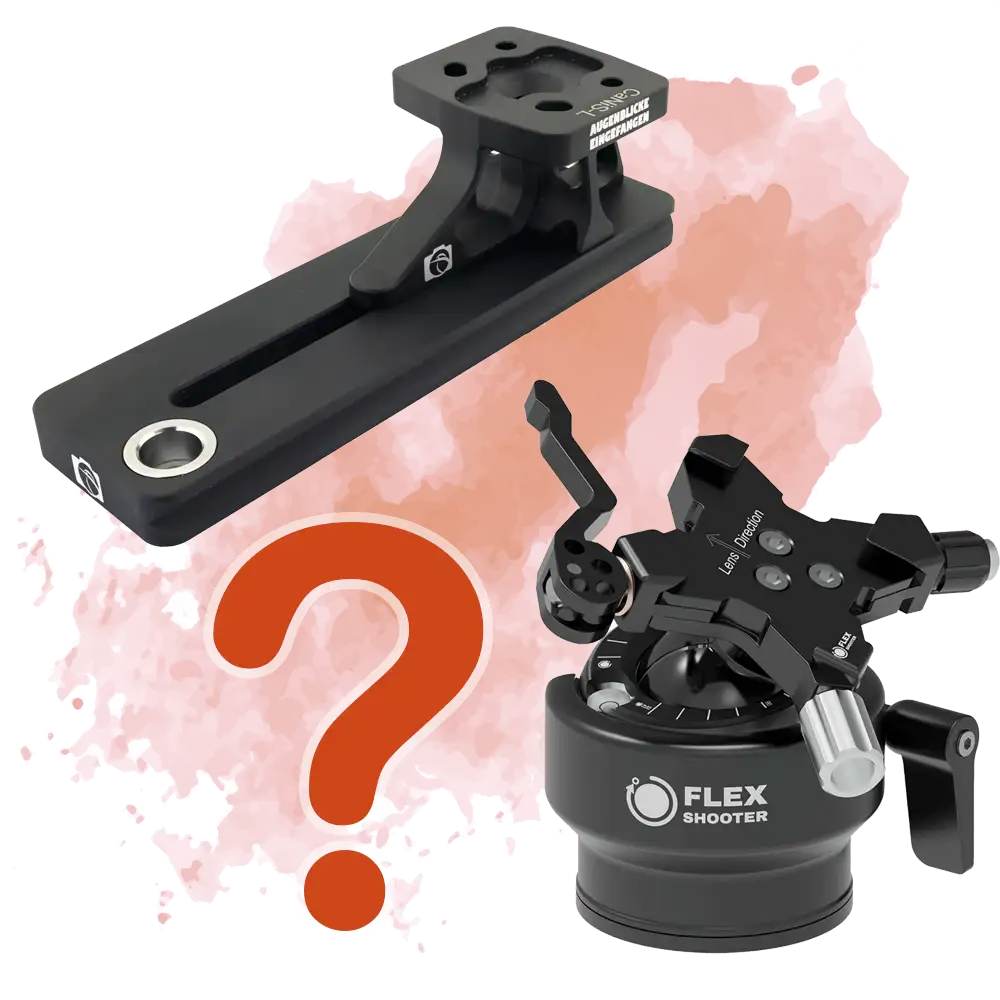
Les têtes de trépied Flexshooteracceptent presque toutes les plaques de caméra et les équerres en L, les colliers d’objectif et les pieds de remplacement avec un profil compatible Arca d’une largeur de 38 mm.
Les Flexshooter avec serrage à levier sont un peu plus tolérants : tu peux y régler la large...
pas en stock, l'article sera commandé pour vous

D’une manière ou d’une autre, il faut bien porter l’équipement photo.
Mais comment fixer la courroie à ton appareil photo ou à ton objectif ?
Traditionnellement, une courroie est fixée à 2 œillets sur l’appareil, et pour les objectifs lourds, une courroie est fixée aux œillets du col...
pas en stock, l'article sera commandé pour vous

Système de fixation modulaire pour sacs à dos photo
Le système MOLLE sur les sacs à dos photo, modularité pour les photographes
Le système MOLLE (Modular Lightweight Load-carrying Equipment) s’est imposé ces dernières années également dans le domaine de la photographie.
Issu à l’origine du milieu...
pas en stock, l'article sera commandé pour vous

FAQ sur la rotule Flexshooter Lorsque vous commencez à vous intéresser à la rotule Flexshooter, la question n’est généralement pas de savoir s’il faut en acheter une, mais plutôt la fameuse : Oui, mais laquelle exactement ?
Dans cette FAQ sur la rotule Flexshooter, nous avons rassemblé les question...
pas en stock, l'article sera commandé pour vous
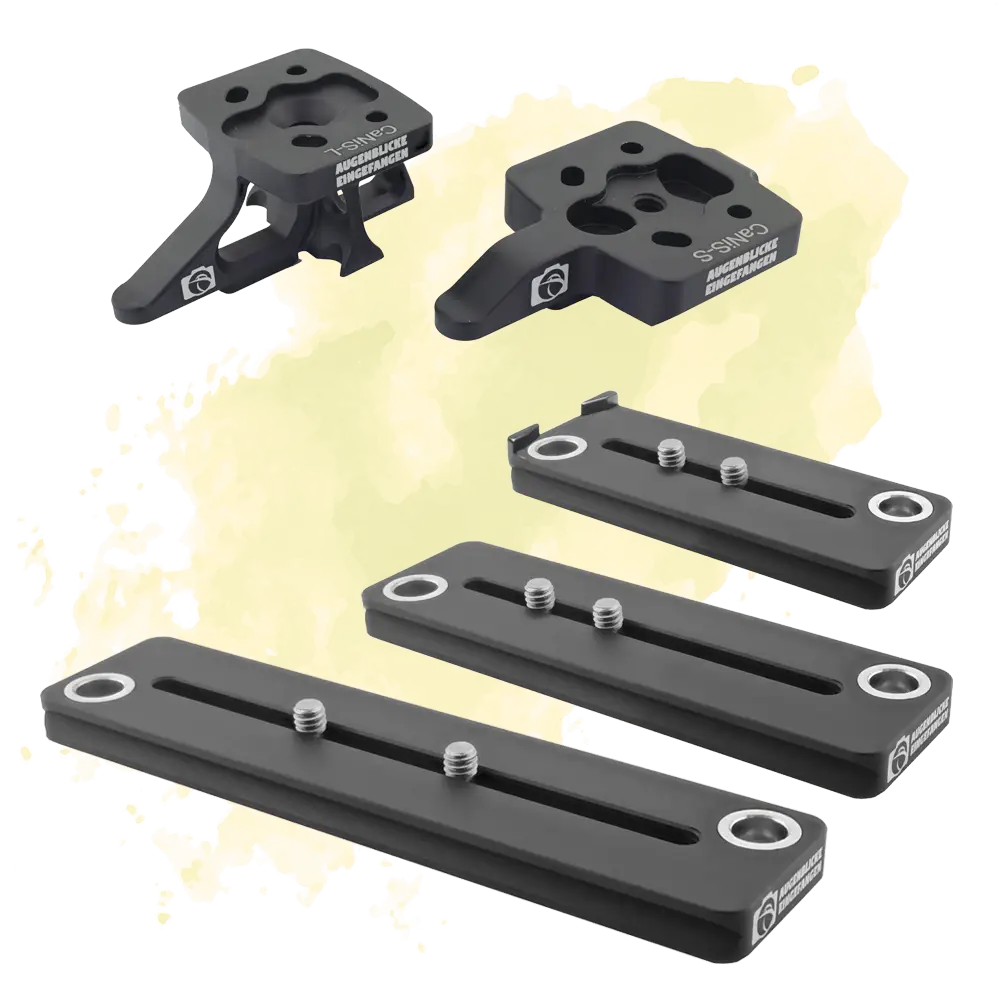
Découvrez l’innovationPieds modulaires de remplacement pour téléobjectifs de Augenblicke-eingefangen Pour les photographes ambitieux, toujours à la recherche de l’équilibre parfait entre stabilité et flexibilité, les pieds modulaires de remplacement de Augenblicke-eingefangen offrent une solution m...
pas en stock, l'article sera commandé pour vous
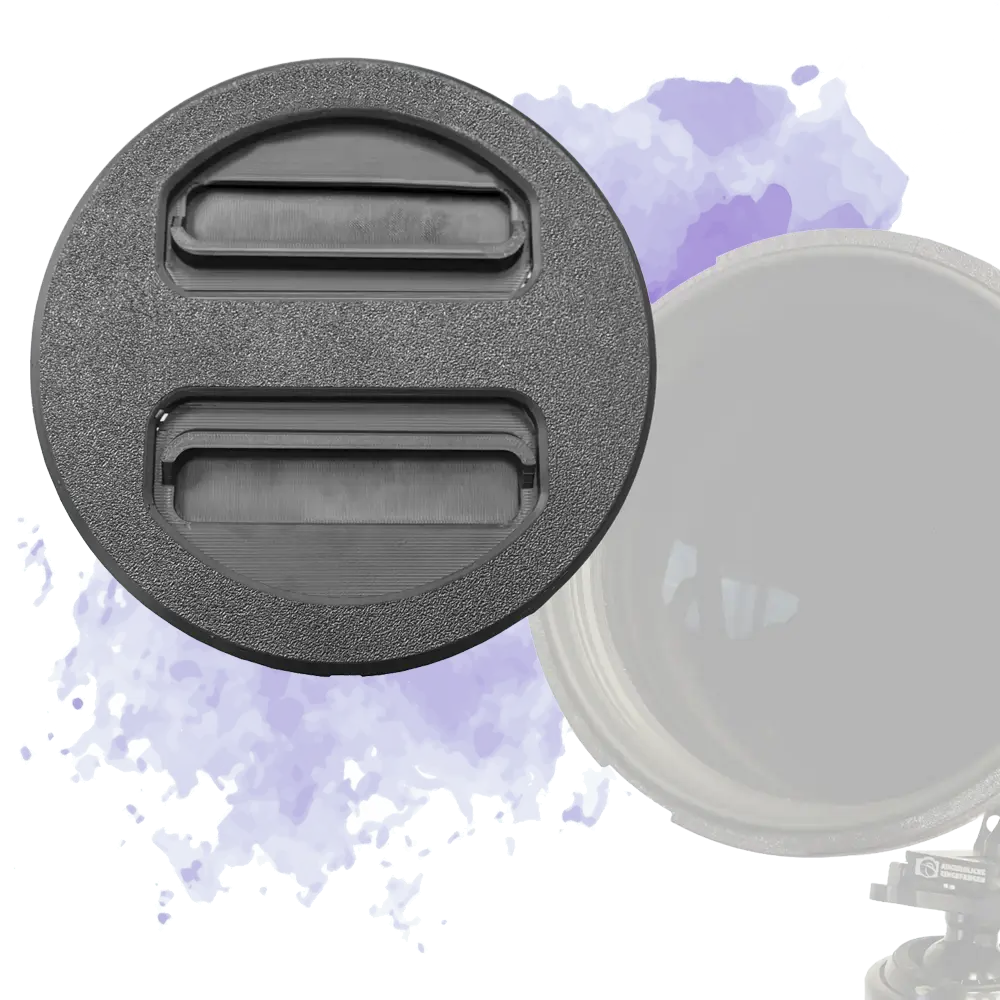
Bouchon d’objectif Snap-On pour grands téléobjectifs : BigLensCaps comme protection frontale parfaitement ajustée Quiconque photographie avec de grands téléobjectifs, par exemple en photo animalière, sportive ou de nature, connaît le problème : La lentille frontale d’un super téléobjectif est gra...
pas en stock, l'article sera commandé pour vous

Protection résistante aux intempéries pour appareil photo et objectif, solutions adaptées à la photo outdoor et animalière
Quiconque photographie régulièrement en extérieur le sait : la météo respecte rarement ses plans.
Surtout en
photographie animalière, de nature et de sport, beaucoup des ima...
pas en stock, l'article sera commandé pour vous