
3-way tilt head
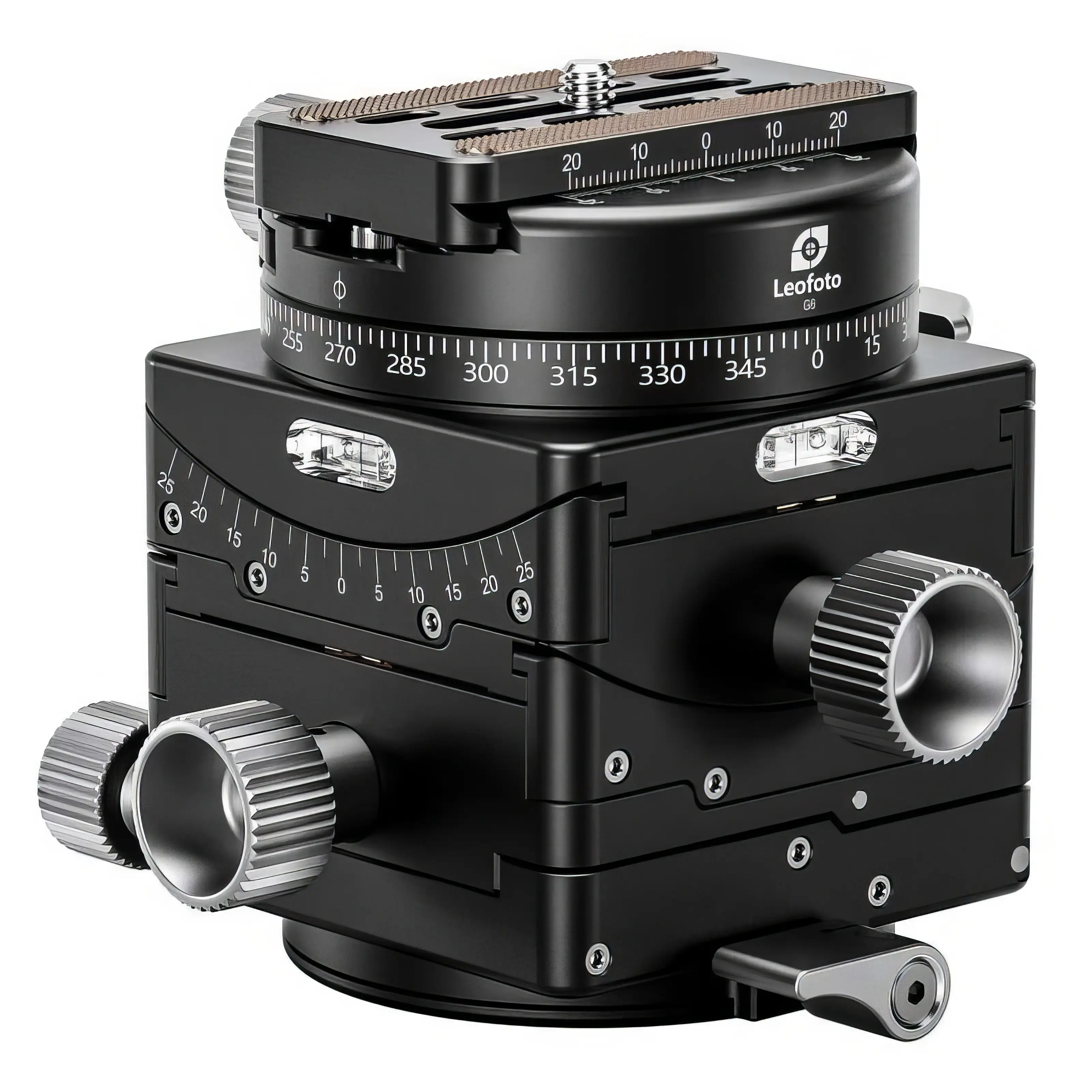
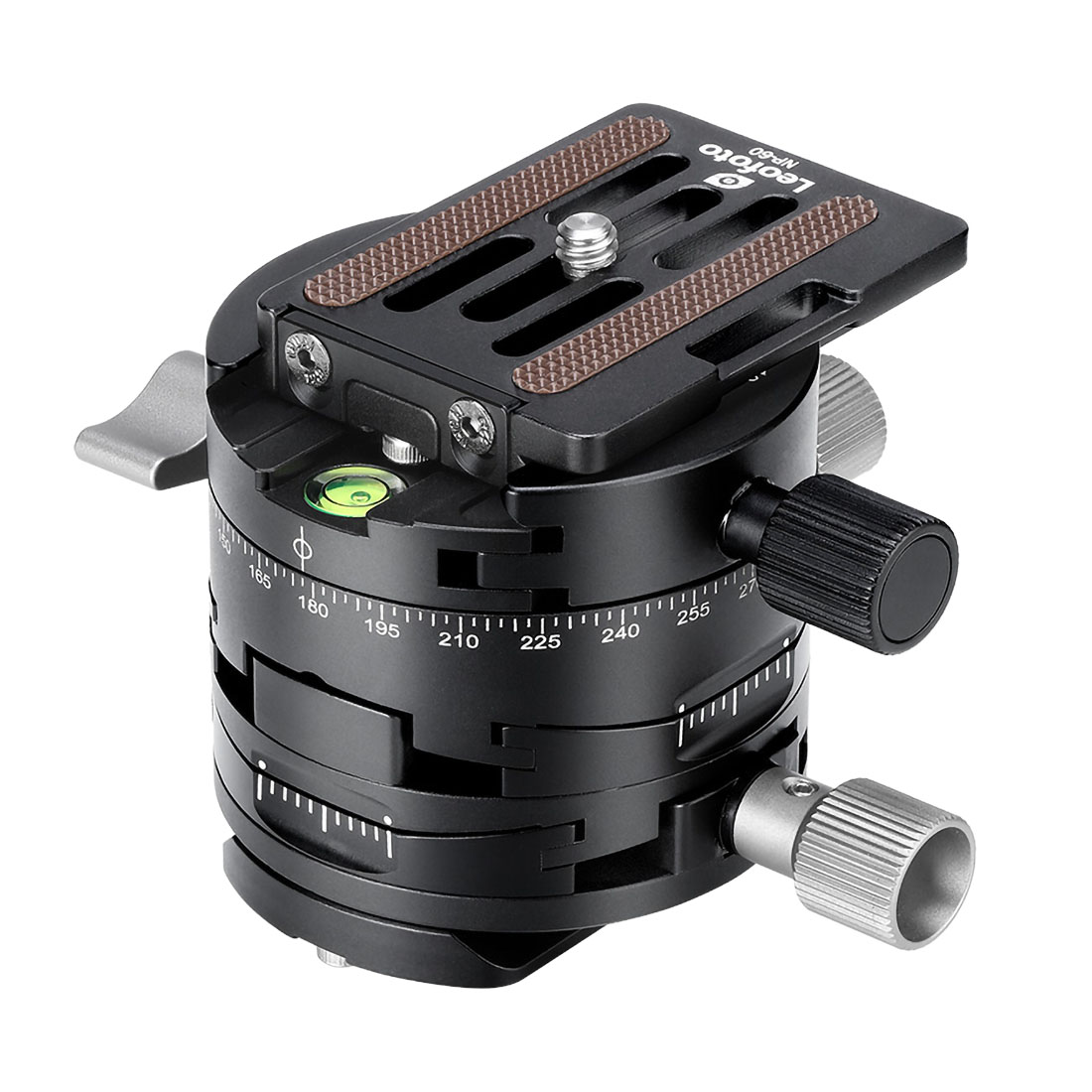
3-way pan-tilt tripod head, precise camera control without circus acrobatics
If you’ve ever tried to get the horizon “roughly” straight in camera, you know: it rarely ends well. That’s exactly where 3-way pan-tilt heads come into play; these tripod heads are made for everyone who doesn’t just want to align their camera somehow, but deliberately, in a controlled and repeatable way. No fiddling, no wobbling, no “ah, it’ll be fine”.
What actually is a 3-way pan-tilt head, and why should you care?
In short: a 3-way pan-tilt head is a tripod head that lets you set your camera precisely along three axes: pan horizontally, tilt vertically, and tilt separately for portrait orientation. Each direction has its own lever or knob. Sounds technical at first, but in everyday use it’s simply pleasantly precise.
In contrast to ball heads, which can move in all directions at once (and sometimes slip exactly when you don’t need it), a 3-way pan-tilt head allows you to adjust one axis at a time. You’re not pulling on the entire frame, only on what you actually want to change. Especially useful for:
- Architectural photography, when lines really need to be straight
- Product photography, when every detail has to be spot on
- Landscape shots with a clean horizon
- Repro work, flatlays, food photography and similar setups
Advantages of a 3-way pan-tilt head, where it really plays to its strengths
Honestly: once you’ve worked with a good 3-way pan-tilt head, a lot of other things feel a bit… random. The most important benefits:
- Maximum control, you align each axis separately, with millimetre precision. No more “oops, now the horizon is crooked again”.
- Stability for heavy cameras, many 3-way heads are designed for DSLRs, full-frame mirrorless cameras and telephoto lenses.
- Reproducible settings, once you’ve found a framing, you can easily repeat it thanks to scales and markings.
- Fine adjustment instead of rough panning, ideal when you’re working with a tripod and don’t want to start over every two seconds.
Of course, a 3-way pan-tilt head is not always the lightest and smallest tripod head, but in return you get calm, stable images. And sometimes that’s worth more than saving 200 grams in your backpack.
Who is a 3-way pan-tilt tripod head particularly suitable for?
You might be wondering: “Do I really need this, or is it just another photography luxury thing?” It depends on how you shoot.
- Ambitious hobby photographers who are annoyed by crooked lines and want more control.
- Content creators & YouTubers who film products, tutorials or setups and don’t want to constantly readjust.
- Architecture and landscape photographers for whom precise alignment is not “nice to have” but mandatory.
- Macro and studio photographers who work with small changes in framing.
If you tend to shoot “fast, light, always on the go”, a ball head can be more practical. But as soon as you plan to work calmly with a tripod, that’s where the 3-way pan-tilt head really shows its strengths.
Important features to look for in a 3-way pan-tilt head
Before you just throw any tripod head into your cart: a few details make all the difference in everyday use. Sometimes it’s the little things, but those are exactly what either annoy you later – or don’t.
-
Load capacity
Make sure the 3-way head can easily handle the weight of your camera-lens combo. Better to allow for some reserve, especially with telephoto lenses or full-frame gear. -
Material & build quality
Aluminium or magnesium alloys are robust and still reasonably portable. Plastic parts are not automatically bad, but if you use your gear a lot, a sturdier build is worth it. -
Quick-release plate
Handy if you want to remove and reattach your camera quickly. Many heads use common quick-release systems, sometimes compatible with Arca-style or manufacturer-specific plates. -
Lever operation
Long levers offer more leverage and finer control, shorter ones are more compact for transport. Think about what suits your use better: studio or on the go. -
Scales & bubble levels
Built-in spirit levels and degree scales help with precise alignment and panorama panning. Not essential, but very pleasant in practice.
3-way pan-tilt head vs. ball head: when each tripod head makes sense
To put it plainly: there is no “better” tripod head, only the more suitable one. A 3-way pan-tilt head is your tool when you want to work precisely and in a controlled way. A ball head is more your buddy for fast, flexible shots.
With the 3-way head:
- you move each axis individually,
- you avoid accidentally changing other directions,
- you work more calmly, especially with long exposures or studio shots.
With the ball head:
- you’re faster in composing your frame,
- you usually have less weight and bulk,
- but less sensitive control over each individual axis.
So if you often shoot with a tripod, maybe even create series of similar subjects or need reproducible perspectives, then a 3-way pan-tilt tripod head is a very sensible investment.
Typical use cases where a 3-way pan-tilt head really shines
Just a few real-world examples so it doesn’t stay too abstract:
- Product photography in a home studio: you align your set cleanly once and then only change the angle minimally, without your framing slipping.
- Interior design & real estate: straight lines, no converging verticals, a clean horizon – a 3-way head makes this much more relaxed.
- Landscapes at sunrise: you set the horizon precisely, wait for the light and don’t have to keep readjusting because something has sagged.
- Food and flatlay photography: camera exactly above the subject, no tilting, no crooked plates – you focus on styling, not on alignment.
How to find the right 3-way pan-tilt head for your tripod
One last point that’s often overlooked: compatibility with your tripod. Pay attention to:
- Tripod mount (thread), the usual sizes are 1/4" or 3/8". Adapters are possible, but the fewer intermediate pieces, the more stable.
- Size & packed dimensions, if you travel a lot, a more compact 3-way head is worth it. For studio work, it can be a bit more massive.
- Control layout, check how the levers are arranged. It sounds trivial, but if you keep grabbing the wrong one, it gets annoying over time.
Bottom line: a 3-way pan-tilt tripod head is not glamorous gear you proudly show off on social media, but rather the solid tool in the background that makes sure your photos and videos look exactly the way you imagined them in your head. And sometimes that’s precisely the difference between “pretty okay” and “wow, that’s spot on”.
BLOG posts

Rain protection for camera and lens, proven solutions for outdoor and wildlife photography
Anyone who regularly shoots outdoors knows: the weather rarely sticks to your plans.
Especially in
wildlife, nature and sports photography, many of the most exciting images are created in rain, fog or
chang...
not in stock, the item will be ordered for you
The bird migration has begun...
At the Baltic Sea, I have the opportunity to photograph waders both on the beach and at waters with shallow shorelines or flooded meadows.
On the beach, it is often enough to lie on your stomach and wait for the animals to come within photo distance.
It's quite differen...
not in stock, the item will be ordered for you
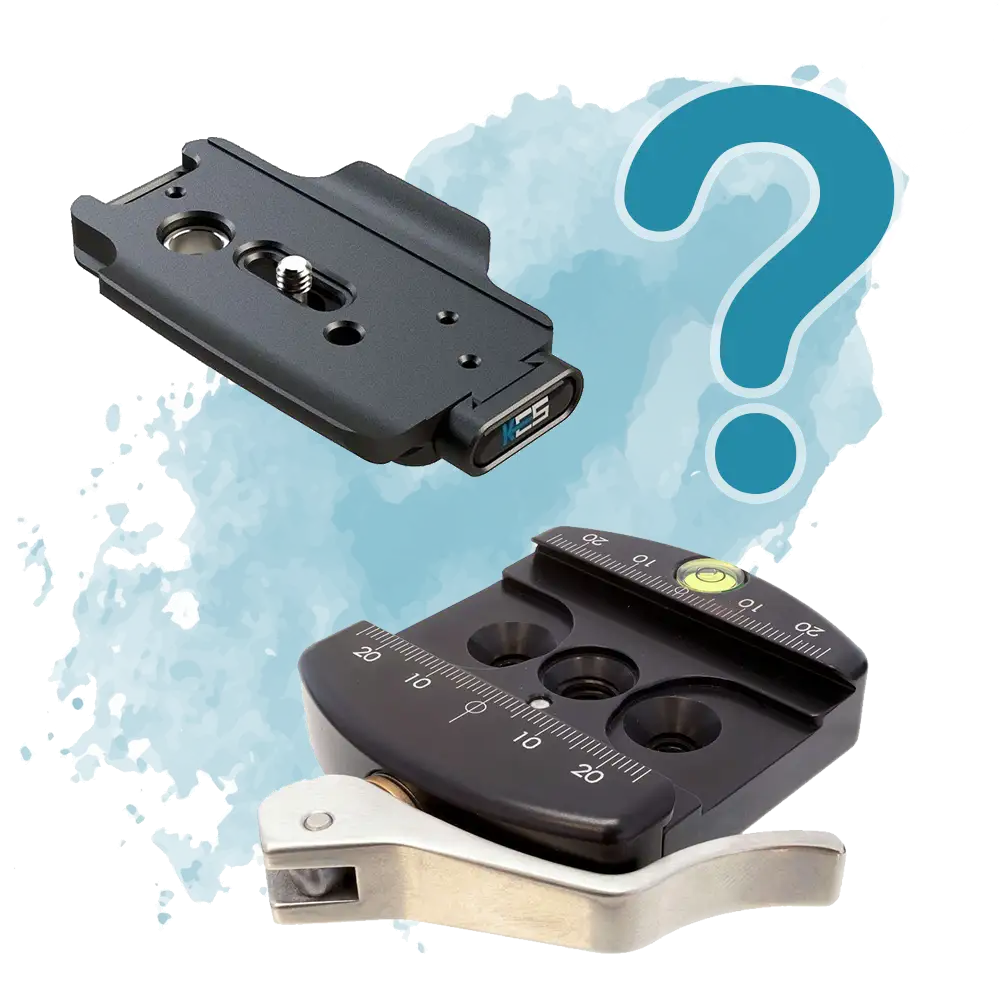
…unfortunately not very much.
In this post, we will gradually test and publish the compatibility of quick release components from various manufacturers.
Listed below, you will find which 38 mm dovetail systems are compatible with each other and which do not fit together.
For this, one must look f...
not in stock, the item will be ordered for you
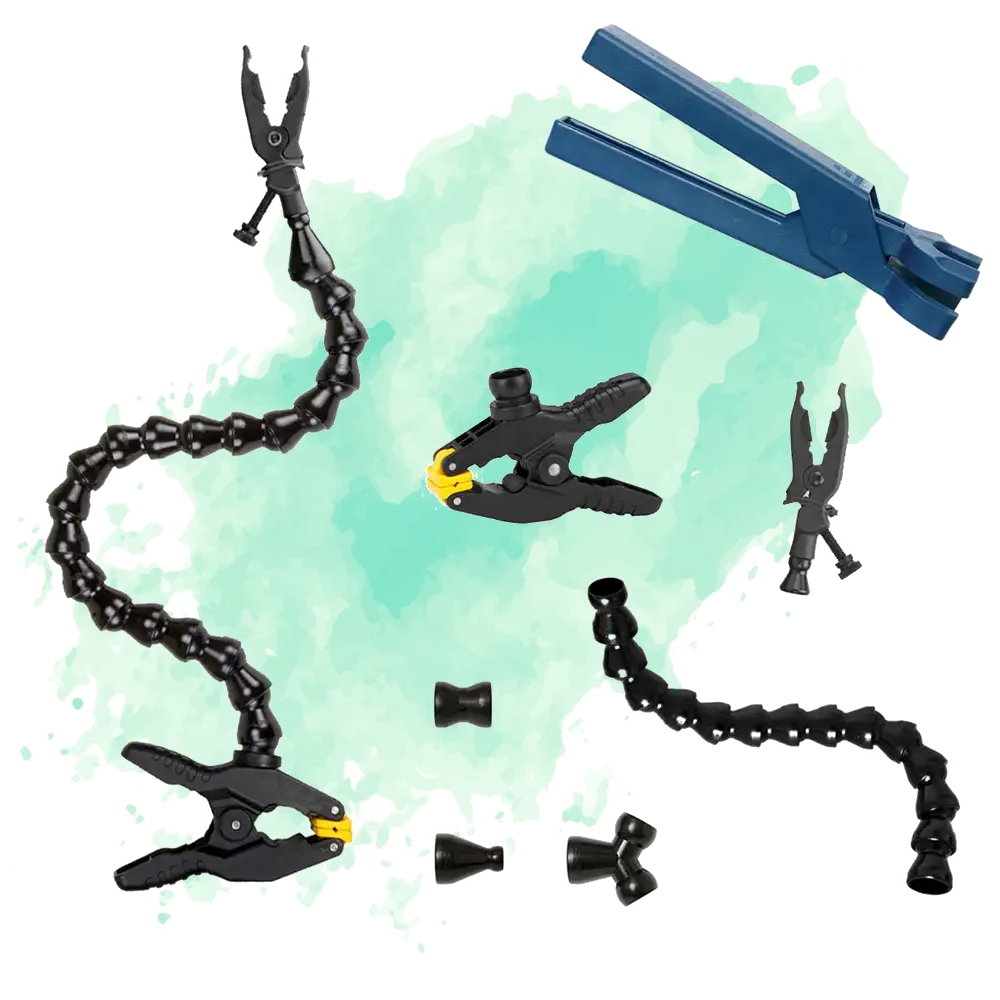
Macro accessories from Wimberley, the Plamp Family for precise macro photography Anyone who seriously engages in macro photography sooner or later stumbles over the same situation: the subject is beautiful, but the light isn’t right, a light breeze tugs at the blossom, and the diffuser is lying some...
not in stock, the item will be ordered for you
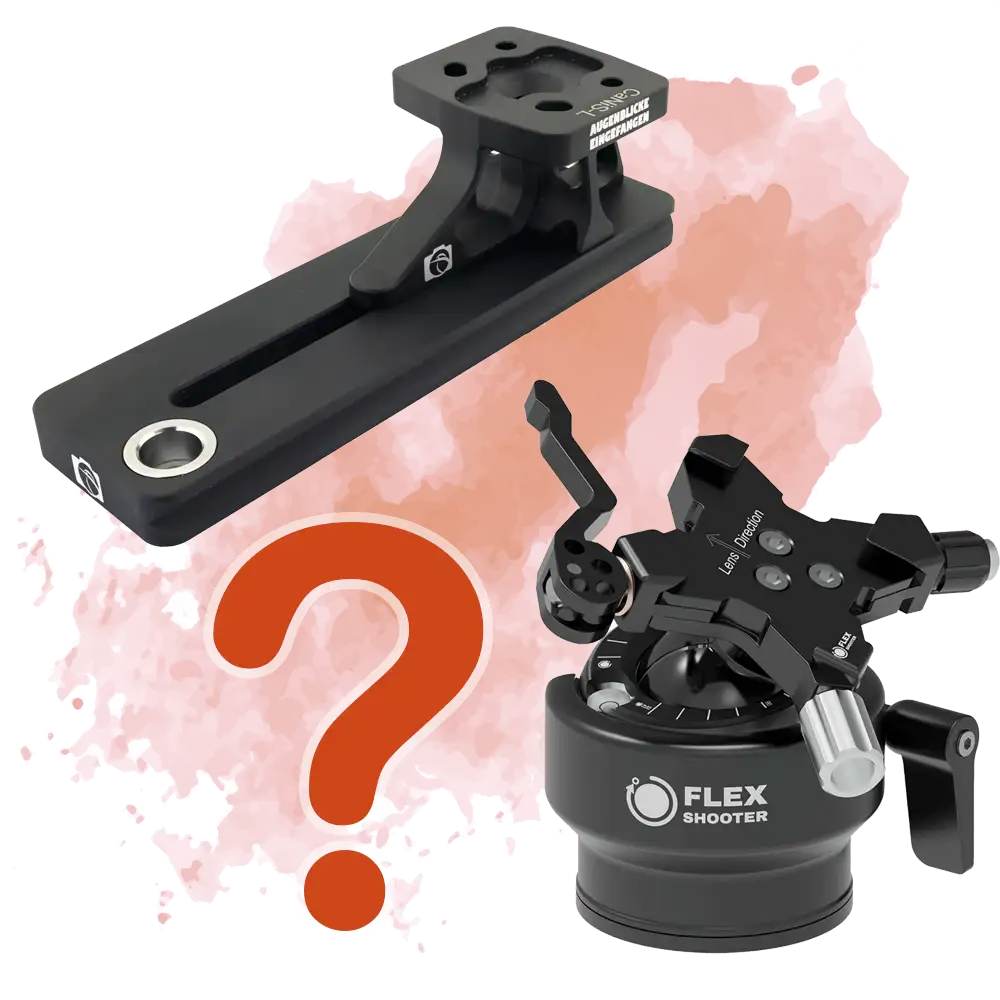
The Flexshooter tripod headsaccept almost all camera plates and L-brackets, lens plates and replacement feet with Arca-compatible profile with a width of 38 mm.
Flexshooters with lever clamp are a bit more tolerant; here you can readjust the clamp width so that your camera or lens sits really firmly ...
not in stock, the item will be ordered for you

Somehow the camera gear has to be carried.
But how do you attach the camera strap to your camera or your lens?
Traditionally, a carrying strap is attached to two lugs on the camera; with heavy lenses, a carrying strap is attached via lugs on the tripod collar.
This is often annoying,...
not in stock, the item will be ordered for you

FAQ about the Flexshooter tripod head
When you start looking into the Flexshooter tripod head, the question usually isn’t whether to get one, but rather the famous “Yes, but which one exactly?
”.
In this FAQ about the Flexshooter tripod head we’ve collected the typical questions we get more frequen...
not in stock, the item will be ordered for you
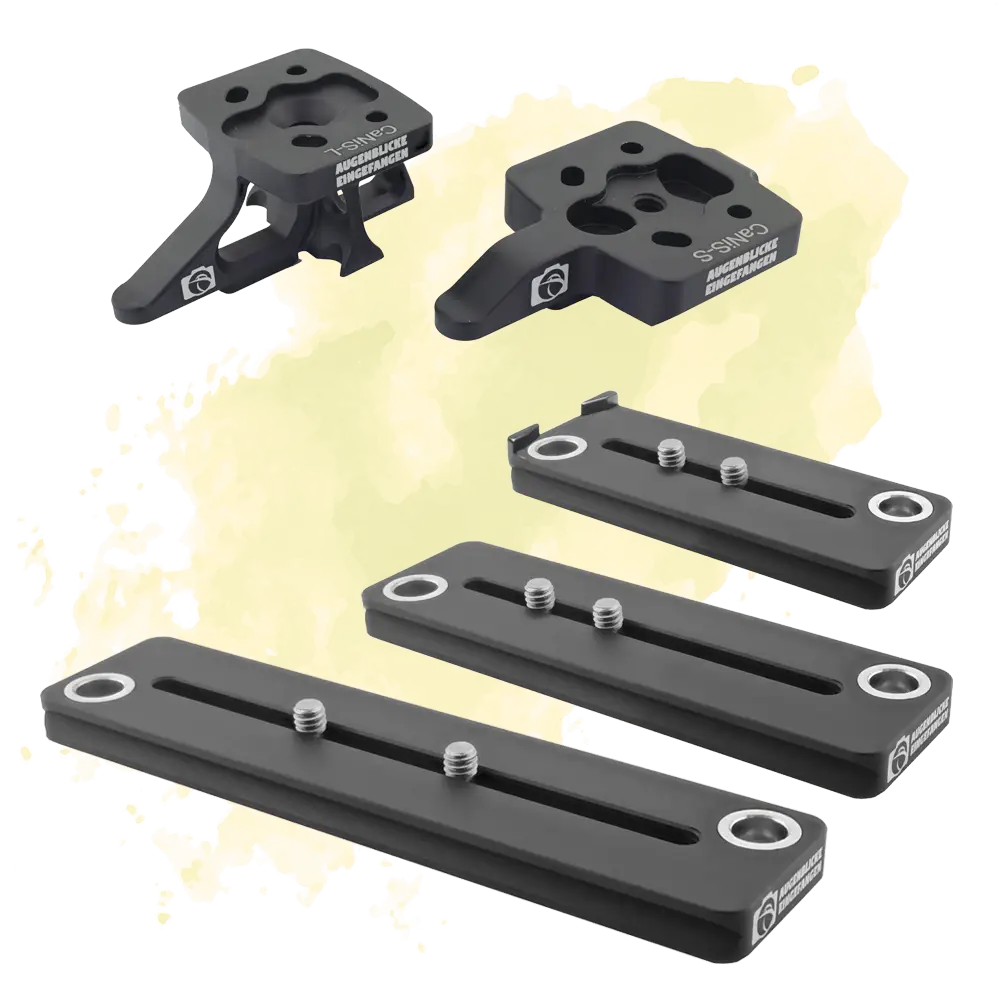
Discover the innovationModular replacement feet for telephoto lenses from Augenblicke-eingefangen
For ambitious photographers who are always looking for the perfect balance between stability and flexibility, the modular replacement feet from Augenblicke-eingefangen offer a modern solution.
These in...
not in stock, the item will be ordered for you

Telephoto Lens Covers in Everyday Wildlife Use: LensCoat vs.
Rolanpro (Tragopan) Compared
In professional wildlife photography, the telephoto lens is the central tool, but at the same time the most sensitive and expensive element of the equipment.
Super-telephoto lenses with focal lengths of 4...
not in stock, the item will be ordered for you

Wintry extreme cold as a photographic opportunity
Due to the frost that has persisted for a longer period this year, at times with double-digit sub-zero temperatures, this winter is very interesting for us nature photographers.
Icy scenes: rare subjects with a downside
There are subjects that are o...
not in stock, the item will be ordered for you

How to find the right tripod leg protector
It is relatively easy to find the right tripod leg protector for your tripod.
The LensCoat Wraps are available in two different versions (apart from the many sizes and camouflage patterns).
Measuring diameter and length
The sizes
You measure the diamete...
not in stock, the item will be ordered for you

Protective solution for the safe transport of large telephoto lenses
LensCoat TravelCoat, secure transport protection for large telephoto lenses
Large telephoto lenses are among the most valuable components of many photography kits.
Especially in
wildlife, nature and sports photography, long foca...
not in stock, the item will be ordered for you
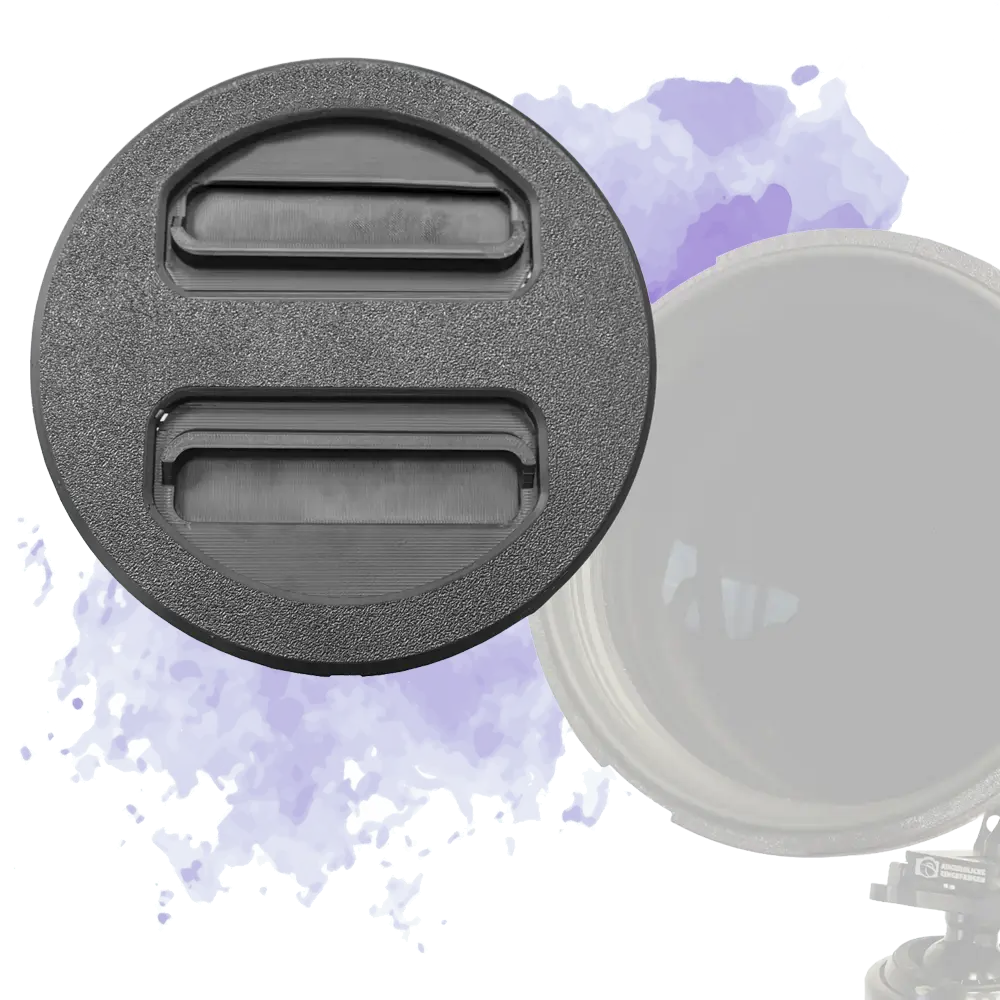
Snap-on lens caps for large telephoto lenses: BigLensCaps as a precisely fitting front element protection Anyone who photographs with large telephoto lenses, for example in wildlife, sports or nature photography, knows the problem: The front element of a super-telephoto lens is large, delicate an...
not in stock, the item will be ordered for you

Modular mounting system for camera backpacks
The MOLLE system on camera backpacks – modularity for photographers
The MOLLE system (Modular Lightweight Load-carrying Equipment) has also become established in the field of
photography in recent years.
Originally developed for the military, this modu...
not in stock, the item will be ordered for you